Storm Names
Since 1953, Atlantic tropical storms had been named from lists originated by the National Hurricane Center. They are now maintained and updated through a strict procedure by an international committee of the World Meteorological Organization.
The six lists above are used in rotation and re-cycled every six years, i.e., the 2014 list will be used again in 2020. The only time that there is a change in the list is if a storm is so deadly or costly that the future use of its name on a different storm would be inappropriate for reasons of sensitivity. If that occurs, then at an annual meeting by the WMO committee (called primarily to discuss many other issues) the offending name is stricken from the list and another name is selected to replace it. Several names have been retired since the lists were created. Here is more information the history of naming tropical cyclones and retired names.
If a storm forms in the off-season, it will take the next name in the list based on the current calendar date. For example, if a tropical cyclone formed on December 28th, it would take the name from the previous season's list of names. If a storm formed in February, it would be named from the subsequent season's list of names.
2020 Gonzalo
| Start Date: | 21 Jul 2020 |
| End Date: | 21 Jul 2020 |
| Pressure Min: | 997 |
| Wind Speed Max: | 54 |
| Storm Category: | 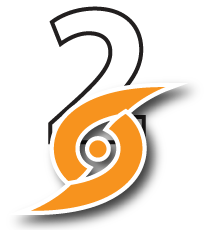 |
Description:Early on July 20, the NHC began monitoring a tropical wave over the central tropical Atlantic for possible tropical cyclone development. Though in an area of only somewhat conducive conditions, the wave rapidly became better organized as it moved quickly westward. By 21:00 UTC July 21, satellite imagery and scatterometer data indicated that the small low pressure system had acquired a well-defined circulation as well as sufficiently organized convection to be designated Tropical Depression Seven. At 12:50 UTC on July 22, the NHC upgraded the depression to Tropical Storm Gonzalo. Gonzalo continued to intensify throughout the day, with an eyewall under a central dense overcast and hints of a developing eye becoming evident. Gonzalo would then reach its peak intensity with wind speeds of 65 mph and a minimum central pressure of 997 mbar at 09:00 UTC the next day. However, strengthening was halted as its central dense overcast was significantly disrupted when the storm entrained very dry air into its circulation from the Saharan Air Layer to its north. Convection soon redeveloped over Gonzalo's center as the system attempted to mix out the dry air from its' circulation, but the tropical storm did not strengthen further due to the hostile conditions. After making landfall on the island of Trinidad as a weak tropical storm, Gonzalo weakened to a tropical depression at 18:00 UTC on July 25. Three hours later, Gonzalo opened up into a tropical wave as it made landfall in northern Venezuela.
Gonzalo was the earliest recorded seventh named storm in the Atlantic basin. The previous record holder was Tropical Storm Gert, which formed on July 24 during the 2005 season.. On July 23, hurricane watches were issued for Barbados, St Vincent and the Grenadines, and a tropical storm watch was issued later that day for Grenada and Trinidad and Tobago. After Gonzalo failed to strengthen into a hurricane on July 24, the hurricane and tropical storm watches were replaced with tropical storm warnings. Tropical Storm Gonzalo brought squally weather to Trinidad and Tobago and parts of southern Grenada and northern Venezuela on July 25. However, the storm's impact ended up being significantly smaller than originally anticipated. The Tobago Emergency Management Agency only received two reports of damage on the island: a fallen tree on a health facility in Les Coteaux and a damaged bus stop roof in Argyle.
In the event that more than twenty-one named tropical cyclones occur in the Atlantic basin in a season, additional storms will take names from the Greek alphabet.